
Naoaki Ito, DPT, PhD, awarded Five-Year NIH Research Grant
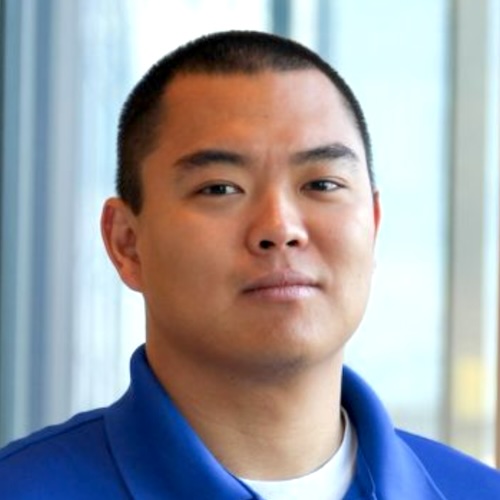 Last month, Naoaki Ito, DPT, PhD, a postdoctoral researcher in the UW Department of Orthopedics and Rehabilitation and Badger Athletic Performance, was awarded a five-year, $945,000 K99/R00 Pathway to Independence Award from the National Institutes of Health (NIH) to fund his research on improving outcomes following patellar tendon injuries. This highly competitive grant supports early-career scientists in transitioning from mentored postdoctoral research to independent academic positions. Dr. Ito’s project begins with a two-year mentored phase, followed by three years of independent research as a tenure-track investigator.
With support from his K99/R00 award, Dr. Ito and his team are developing a new approach to optimize treatment for two common knee injuries: patellar tendinopathy (often known as jumper’s knee) and secondary injuries from ACL surgery that uses the patellar tendon as a graft, which can significantly impair mobility and quality of life. The team’s work focuses on better understanding how the tendon responds to exercise-based rehab – the gold standard treatment – and creating more precise and personalized treatment strategies.
This prestigious recognition highlights Dr. Ito’s exemplary line of research as an early career clinician-scientist focused on advancing strategies to restore and maintain tendon health.
Bryan Heiderscheit, PT, PhD
Frederick Gaesnlen Professor in Orthopedics
Vice Chair of Research
Department of Orthopedics and Rehabilitation
University of Wisconsin School of Medicine and Public Health
Dr. Ito’s primary mentors during the two-year mentored phase include:
- Bryan Heiderscheit, PT, PhD, FAPTA, Frederick Gaenslen Professor and Vice Chair of Research in the Department of Orthopedics and Rehabilitation who will leverage his extensive experience in managing large-scale clinical research studies to provide Dr. Ito guidance on managing his first clinical trial; and
- Darryl Thelen, PhD, the John Bollinger Chair of Mechanical Engineering and Bernard A and Frances M Weidman Professor in the UW College of Engineering and the inventor of shear wave tensiometry who will contribute his expertise for implementation of the technology in a clinical setting; and
- Diego Hernando, PhD, Associate Professor of Radiology and Medical Physics at UW and a leader in the field of diffusion-weighted imaging will mentor Dr. Ito on the novel implementation of diffusion tensor imaging in tendons.
Dr. Ito will also be supported by co-mentors:
- Stephanie Kliethermes, PhD, Associate Professor in the UW Department of Orthopedics and Rehabilitation and Research Director of the American Medical Society for Sports Medicine, who will bring her expertise in biostatistics and clinical trial design; and
- Karin Silbernagel, PT, PhD, FAPTA, Professor and Associate Chair of the Department of Physical Therapy at the University of Delaware who is a world-renowned leader in tendon rehabilitation.
In addition, collaborators Samuel Hurley, PhD, assistant professor in the UW Department of Radiology, and Jack Martin, PhD, a research scientist in the UW Department of Orthopedics and Rehabilitation, will provide further support in the application of imaging and tensiometry techniques.
Dr. Ito’s research incorporates two emerging technologies to better understand how tendons respond to rehabilitation. One is shear wave tensiometry, using a wearable device capable of accurately measuring tendon force during movement and exercise – something that has been difficult to quantify in the past. The other is diffusion tensor imaging, an advanced MRI technique that provides detailed insight into the internal structure of tendons, allowing researchers to track tissue changes and recovery over time.
In addition to these tools, Dr. Ito’s team is evaluating whether neuromuscular electrical stimulation (NMES) – which uses electrical pulses to activate muscles – can enhance tendon loading during rehab and improve healing outcomes. By combining these innovative technologies with rigorous clinical research, the project aims to create more effective rehabilitation protocols tailored to individual patient needs.
Ultimately, Dr. Ito hopes this work will not only improve treatment for knee injuries but also pave the way for better approaches to tendon rehabilitation across the body – and smarter, science-driven strategies that help patients recover more fully and return to their daily activities with confidence.