
Neenah teen recovers from near-crippling injury to become pro motorcycle racer
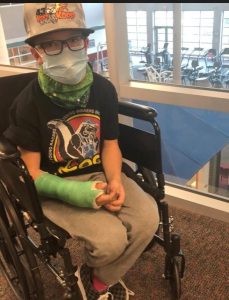
It took something as small as the width of a motorcycle tire to change Jack Brucks’ life forever.
Brucks, then 10 years old, was riding a single-piston motorcycle in a flat-track training session — his specialty — in Texas when his front wheel struck a tire that was on the track as a marker, sending him flying in the air. When he landed, his right hip was virtually shattered.
“I hit a tire, did a front flip, landed, screamed, and I don’t remember much after that,” he said.
The next thing he knew, he was being tended to by adults, and an ambulance was on the way. He was taken to Conroe County Hospital for emergency treatment and then to Texas Children’s Hospital in Houston for surgery to stabilize his hip, and his arms and ribs, which were also broken in the crash. Brucks’ hip was dislocated and severely fractured, which included damage to his femoral head and growth plate.
Brucks was in Texas at a training camp with friends, while his family was hundreds of miles away in Georgia for a wedding. The crash set off a frantic rush to get to Brucks as quickly as possible, according to his mom, Katie Brucks.
“I remember it like it was yesterday, we were all getting ready to go to the airport to go home — and we got the call,” she said.
Katie went to Texas, while the rest of the family went back to Wisconsin. She was able to get there in time for his surgeries. After four days of recovery, Katie and Jack flew back to Wisconsin.
The Brucks family owns and operates Lucky Stables horse riding school at their home property just west of Neenah. Because of their business, Katie posts often on social media, and after posting photos of X-ray images of Jack’s hip online, she almost immediately received a message from a friend who is a doctor, offering advice about Jack’s follow-up care.
“He said, ‘Katie, no doctor in the Fox Valley is good enough for him, this is big,’” she said.
The best plan of treatment
Katie began an urgent search for the best doctors to work on Jack’s hip, but when the time came to make a choice, UW Health stood out, she said.
“They had the best doctors, the best plan to treat him and it’s in Wisconsin, which was huge for us,” Katie said.
Jack began racing motorcycles on the frozen water of Lake Winnebago at age 4, and quickly progressed to racing on flat dirt tracks around Wisconsin. At age 6, he won his first state junior championship in 2016, and by 2019, he won his first junior national championship. Clearly, flat-track motorcycle racing was his passion, but the crash in 2020 put all of that in danger, and in the hands of Drs. Pamela Lang and David Goodspeed, both orthopedic surgeons at UW Health.
Upon meeting them, there was a bit of a surprise, according to Katie.
“We went to his first follow-up appointment at UW Health, and they didn’t let us go home,” she said.
When Jack was seen by the team at UW Health, they determined more surgeries would be needed to repair the damage done in the crash.
“This injury was so severe, and the surgeries so complex, we prepared the family for the possibility he may not walk without assistance again, let alone race a motorcycle,” said Goodspeed, who is also an associate professor in the Department of Orthopedics and Rehabilitation at the University of Wisconsin School of Medicine and Public Health.
“Any operation on the head and neck [of the femur], especially with young people, requires some specialized techniques to be able to dissect around the blood supply of the femoral head to try to preserve it,” he said. “We had to put his fractures back into place and then fix them in a way that we could preserve the blood supply to the head.”
Lang, who is no longer with UW Health, and Goodspeed performed two surgeries on his right hip. They were successful, but the path back to racing was still not certain, and there would be months of rehab while he healed and future surgeries to remove the hardware in his hip. If all of that was successful, he could maybe race again.
That hope was all he needed, Jack said.
“Racing kept me going when it got hard; it’s my passion, it’s all I ever wanted to do,” he said.
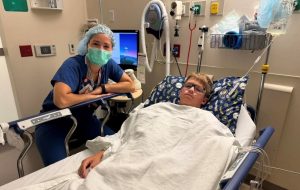 During his rehab, which included two days in the hospital followed by monthly — eventually every three to six months — trips to UW Health in Madison to learn exercises and receive checkups, his care was overseen by Dr. Andrea Spiker, orthopedic surgeon at UW Health, and an assistant professor in the Department of Orthopedics and Rehabilitation at the UW School of Medicine and Public Health.
Spiker, who is also director of the UW Hip Preservation Program, performed the last of Jack’s surgeries in 2024 to address the cartilage on the head of his femur and fix the labrum in his hip.
“In talking with Dr. Goodspeed, our discussion centered around what could we do next to get Jack back to his high level of athletic function, pain-free and to preserve his native hip as long as possible,” she said.
That included a different set of wheels, as he started life after the crash in a wheelchair before progressing to a walker and crutches. For the next six months, there were ups and downs physically and emotionally. He had a setback just as he thought he would be out of the wheelchair, as a more extensive surgery was necessary to remove the hardware in his hip because the bone had grown around it. This forced him to rest again, and to do more rehab.
A return to racing
Jack continued to heal, but the mental aspect of his rehab was taking a toll. So, he snuck in a motorcycle ride in his yard at home.
“After I got back on a bike, that helped,” he said. “I kind of told myself, ‘I can come back; we’re good.’”
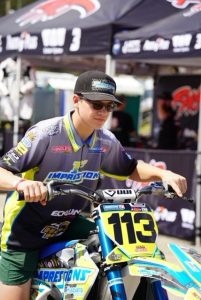 As his rehab progressed, it was clear he would walk well again, which left the door open for racing. The care team at UW Health did their best to make sure that was the case, according to Katie.
The doctors at UW Health not only believed in him but tailored his care with a return to racing in mind,” she said. “They knew how much this meant to him.”
He returned to racing in a big way. He took second in his first race back after being cleared to race in May 2021. He went on to win another national junior championship, and continued to rise through the amateur ranks, joining an elite team from Florida called 1st Impressions Racing — but the best was yet to come. In December 2025, Jack secured his first professional contract with 1st Impressions. Having graduated high school early, Jack, now 16, can finally make flat-track motorcycle racing his calling.
“All I can say is a huge ‘thank you’ to all the people at UW Health for what they did for me,” Jack said. “To fulfill my dream of racing means everything, racing is my life.”
.
This story originally appeared on uwhealth.org.

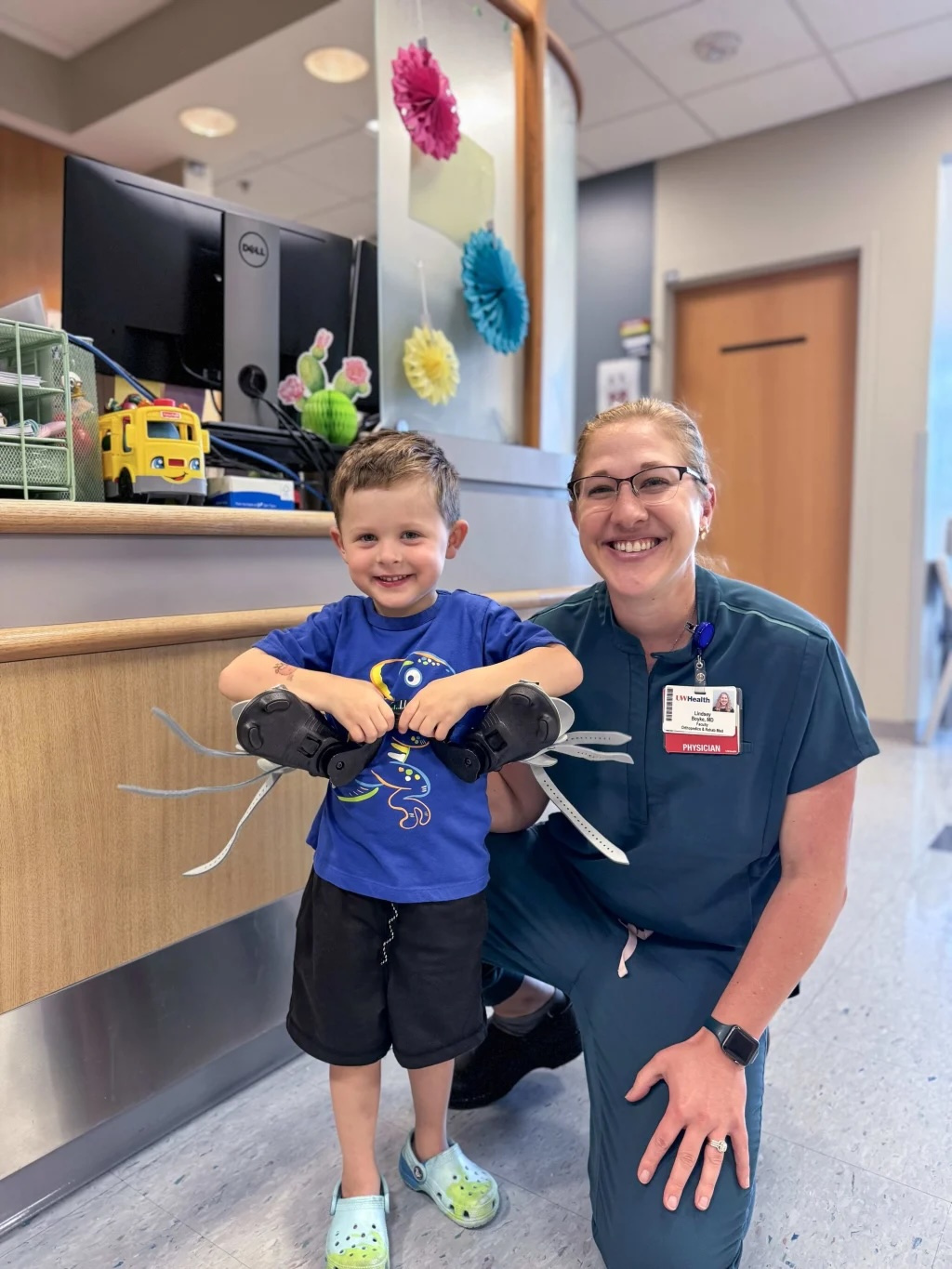

 “Dr. Ponseti was essentially ignored by most orthopedic surgeons for decades,” Noonan says. “As word of the Ponseti Method began to spread online, families would come to Iowa City from all over the world to have their kids treated. Over the last 25 to 30 years, the Ponseti Method thankfully emerged as the standard form of treatment. Today, our entire team is trained [on] how to perform the Ponseti Method.”