
Learning and Serving Through Global Health: A Resident’s Experience in Honduras
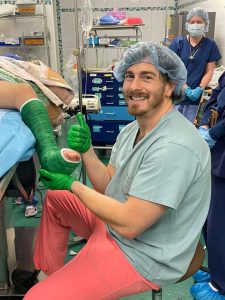
By Cameron Trotter
During my undergraduate years, I had the opportunity to participate in a mission trip to Peru. Returning to a resource-limited setting at this stage of my medical training, however, felt different. With the knowledge and surgical skills I have gained during residency, I felt I could contribute in a more meaningful and tangible way. Through the generous support of the Global Health Program at the UW Department of Orthopedics and Rehabilitation, along with the leadership of our residency program, I was fortunate to make this experience a reality.
We flew into Comayagua, Honduras, where we joined the other members of our team and piled into a van for the drive to Siguatepeque. Our group consisted of approximately 20 people from a wide range of professional backgrounds, including current and retired nurses, physical therapists, physicians, anesthesia providers, and students. As we traveled through the rural and urban landscapes of Honduras toward the hotel that would be our home for the next week, I began to appreciate the diversity of the group. People had traveled from across the United States, bringing different skills and experiences but sharing the same goal: providing care to children who might otherwise have limited access to it. That evening, we shared our first meal together, introduced ourselves, and prepared for our first day of clinic.
The following morning, we drove approximately 20 minutes through the mountainous terrain outside Siguatepeque to a local school where benefactors had helped build the operating rooms we would use throughout the week. As we made our way up the steep gravel driveway, dozens of vehicles were already parked outside the gate, and more than 100 patients and family members were waiting beneath makeshift shelters. The school itself contained several classrooms normally used by grade-school children; for the day, those classrooms became our examination rooms.
After meeting our local interpreters and organizing the clinic, we began seeing patients. One of the most striking experiences was watching family members carry their children into the clinic, regardless of the child’s age or size. Some families told us they had traveled more than four hours to be evaluated. They arrived carrying folders containing years of medical records and physical copies of radiographs for us to review. If updated imaging was necessary, families had to travel to a local hospital to obtain new X-rays and then return later that day – a process that highlighted how even seemingly routine aspects of medical care can become significant obstacles when resources are limited.
At the same time, it was incredibly gratifying to see children the team had followed for years return to clinic and hear their families report how well they were doing. These encounters provided a tangible reminder of the lasting impact this mission has had through its continued presence in the community. They also demonstrated how conditions we routinely evaluate and treat in the United States can present very differently when access to specialty care, imaging, therapy, equipment, and surgery is limited.
Over the course of the morning, afternoon, and early evening, our physicians evaluated approximately 100 children for new consultations, follow-up visits, and postoperative assessments. It was an exhausting but deeply rewarding day, and our work was not yet finished. While the physicians were seeing patients, the rest of the team prepared the operating rooms and organized the equipment and supplies we would need for the next five days.
After dinner that evening, we transitioned to what the team appropriately calls the “war room.” There, we reviewed the cases of children who were candidates for surgery and determined how we could use our limited time and resources to have the greatest possible impact. These discussions required thoughtful input from senior team members as we considered not only each child’s clinical needs but also the availability of operating time, implants, instruments, medications, postoperative resources, and other supplies. After approximately two to three hours of planning, we finalized the operative schedule and returned to our hotel to prepare for the week ahead.
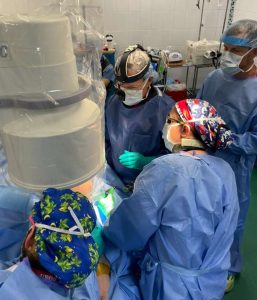 We spent the next five days in the operating room, with each trainee paired with one of our attending surgeons. Altogether, our team performed approximately 25 procedures of varying complexity, ranging from Achilles tendon lengthenings to pelvic osteotomies and complex limb reconstruction.
For me, the operative experience provided an invaluable opportunity to advance both my surgical skills and my understanding of pediatric orthopedic care. For example, many children with cerebral palsy required bilateral procedures to address contractures. In several cases, while my attending performed the procedure on one extremity, I was able to perform the corresponding procedure simultaneously on the contralateral side. Experiences like these allowed me to take on meaningful surgical responsibility while working directly alongside experienced surgeons.
Despite the long days, the team’s energy and sense of purpose remained remarkably positive. Everyone understood the potential impact that these procedures could have on a child’s mobility, independence, comfort, and quality of life. Each morning, we also rounded together on patients who had required overnight observation. Watching physicians, nurses, anesthesia providers, therapists, and other team members work collaboratively reinforced how essential multidisciplinary care is, particularly when resources are constrained. Every decision required us to consider how best to meet an individual patient’s needs with the resources available.
There were also quieter moments throughout the week that made the experience memorable. Between cases, we occasionally had the opportunity to walk around the school grounds and appreciate the natural beauty of rural Honduras. Each day, food from local establishments was brought to the team, giving us the chance to try different local dishes while providing a much-needed break before returning to the operating room.
After our final day of surgery, we visited Siguatepeque, explored several local shops, and shared one final meal at a restaurant that members of the mission team have visited for years. It was an opportunity to reflect as a group on what we had accomplished before beginning our journey home the following day.
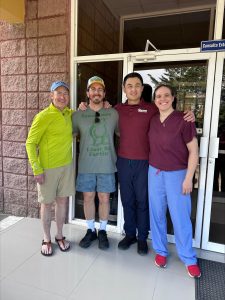 Looking back, I feel incredibly fortunate to have had the opportunity to participate in this global health experience during my residency. The week gave me a much greater appreciation for the challenges of delivering orthopedic care in a resource-limited setting and for the ingenuity, collaboration, and careful stewardship required when resources that we often take for granted are not readily available.
At the same time, the experience contributed meaningfully to my own development as a surgeon. I strengthened my surgical skills, learned from physicians and healthcare professionals with diverse backgrounds. I built relationships with people united by a common desire to improve the lives of their patients. Most importantly, I was able to use the training I received during residency to contribute directly to the care of children and families who traveled long distances seeking help.
I am deeply grateful to the Global Health Program, our residency leadership, the physicians and volunteers who have sustained this mission over the years, the local team in Honduras, and the donors whose generosity makes experiences and care like this possible. Their support extends far beyond providing a meaningful educational opportunity for residents – it helps bring specialized orthopedic care to children and families who might otherwise have limited access to it.
This experience reminded me why opportunities in global health are so valuable, both for the communities served and for the physicians privileged to participate. I highly recommend this experience to future residents and hope to carry the lessons, relationships, and perspective I gained in Honduras throughout the rest of my training and career.