News & Events

See All News and Events

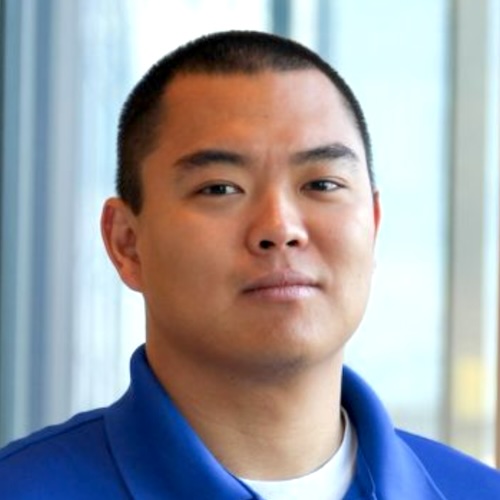
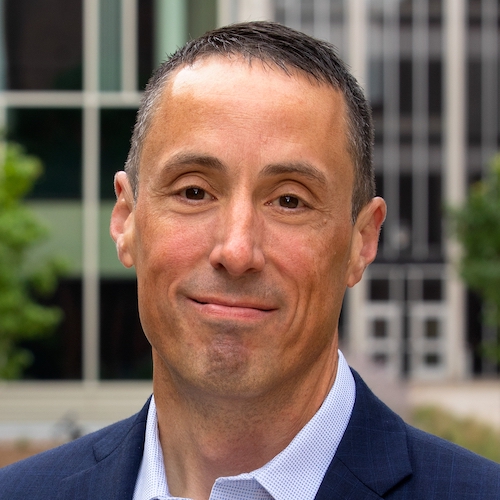
Freedom of Movement Awardee Andrew Watson, MD, aims to Improve Injury Prevention in Young Athletes


Andrew Watson, MD, associate professor in the UW Department of Orthopedics and Rehabilitation and director of the UW Human Performance Lab, has received a 2026 Freedom of Movement (FOM) Award in support of his research project, “The Interaction of Surface Type and Heat Stress to Influence Musculoskeletal Injury and Concussion Risk in Youth Athletes.” The award provides internal funding for a large-scale, data-driven study aimed at reducing injury risk in youth sports through evidence-based match scheduling.

Dr. Watson’s project addresses a critical gap in youth athletics. Although the risks associated with heat, playing surfaces, and competition demands are increasingly recognized, there is currently no evidence-based framework to guide match scheduling in ways that protect young athletes. This study will be among the first to prospectively combine real-world injury surveillance with detailed weather and playing surface data from elite youth soccer events across the United States, examining how heat stress, surface type, age, gender, and time of day interact to influence musculoskeletal injury and concussion risk.

A key strength of the project is its scale and real-world setting, made possible through a collaboration with the Elite Clubs National League (ECNL), the nation’s premier youth soccer development and competition platform, and the ECNL’s Center for Athlete Health and Performance. Dr. Watson’s lab has partnered with the ECNL for several years on initiatives related to athlete well-being, including mental health and injury prevention.

“Our collaboration with the ECNL,” said Dr. Watson, “has resulted in a fantastic opportunity to generate specific evidence that can translate into real-world interventions to benefit young athletes. This project builds on that relationship by advancing our understanding of how environmental factors influence injury risk and helping to develop a truly innovative approach to match scheduling that optimizes player health and safety.”

For this study, the ECNL is providing access to national injury surveillance data and match scheduling information. Certified athletic trainers at more than 40 ECNL national events will collect detailed injury information, allowing the research team to calculate precise injury rates across different age groups, genders, and playing surfaces. Data will be collected from events totaling an estimated 400,000 to 500,000 player-hours, providing the statistical power needed to identify meaningful injury patterns and interactions among multiple risk factors.

Injury surveillance data will be paired with historical local weather data to calculate wet bulb globe temperature, a standard measure of heat stress. This integrated approach will enable a more nuanced understanding of how environmental conditions influence injury risk in youth athletes.

The potential impact of this work is substantial. By examining how environmental and structural factors intersect, the research aims to identify previously unmeasured injury risk patterns and translate findings into practical, scalable match scheduling strategies that better protect young athletes while preserving competitive integrity. These findings could ultimately serve as a model for injury prevention, not only in youth soccer, but across a wide range of youth sports nationwide.

Collaborators on this project include Jennifer Sanfilippo, PhD, assistant director of sports medicine within UW Athletics and coordinator of Badger Athletic Performance, Christian Lavers, MBA, JD, president and CEO of the ECNL, and Kristin Haraldsdottir, PhD, a research scientist within the UW Human Performance Lab. Together, the team brings expertise in athletic performance, sports administration, injury epidemiology, and applied research, ensuring the project’s findings will be both rigorous and impactful.

“We are truly grateful to the UW Department of Orthopedics and Rehabilitation for the support of this ongoing work,” said Dr. Watson.
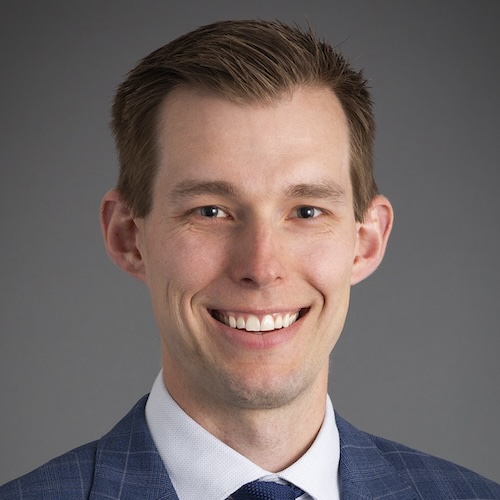
Eric Cotter, MD, receives Freedom of Movement Award for Research to Improve Outcomes after Reverse Shoulder Replacement


The UW Department of Orthopedics and Rehabilitation named orthopedic surgeon and assistant professor Eric Cotter, MD, a recipient of the 2026 Freedom of Movement (FOM) Award. Dr. Cotter’s FOM grant will support an innovative research project focused on improving outcomes after reverse total shoulder arthroplasty. The project, titled “Soft Tissue Tensioning in the Setting of Inlay, Lateralized Designed Reverse Total Shoulder Arthroplasty: A Cadaveric Study,” seeks to better understand how soft-tissue tension affects shoulder function following this commonly performed procedure.

Reverse total shoulder arthroplasty is now the most frequently performed type of shoulder replacement worldwide. Unlike a native shoulder joint, a reverse implant alters the normal ball-and-socket joint orientation, leading to changes in muscle mechanics and soft-tissue tension. While this approach has expanded surgical options for patients with complex shoulder conditions, debate continues surrounding how best to position implants and balance soft tissues to achieve optimal function.

Dr. Cotter’s study aims to define the ideal tension to apply during reverse shoulder replacement and how that tension affects surrounding structures. A novel aspect of the study is the use of a handheld tensiometer – a tool developed by co-investigator Josh Roth, PhD – to directly measure soft tissue forces within the shoulder during implantation. The project also incorporates a muscle–sparing surgical technique, visual markers to assess strain on the acromion as a surrogate for deltoid tension, and dynamic ultrasound imaging to evaluate shoulder joint stability.

The research team will conduct a cadaveric study of 20 shoulders, first simulating a standard clinical shoulder examination using ultrasound to establish baseline, native joint laxity. Reverse shoulder replacements will then be performed while systematically varying the thickness of the polyethylene component to incrementally increase soft-tissue tension. The team will collect measurements to assess how these changes influence acromial strain and tension within the conjoint tendon.

“This work,” says Dr. Cotter, “is one small step toward better understanding how tight we should be putting in these implants and if we can use a tensiometer for real-time feedback of soft tissue tension. This improved soft tissue balancing should lead to better long-term functional outcomes.”

Support from the Freedom of Movement Award enables this early phase of what Dr. Cotter hopes will be a larger research effort – one that has the potential to refine surgical decision-making in reverse shoulder arthroplasty in a way that optimizes postoperative range of motion for these surgical patients.

In addition to Drs. Cotter and Roth, Kyle Wagner, MD, Lauren Summers, MD, Andrew Sheean, MD, and Herman Feller, PhD, are co-researchers on the project. Pilot work is already underway, and the team anticipates completing the study by December 2026.

Congratulations to the Summer 2025 UW Ortho-Rehab Pilot Award recipients


The UW Department of Orthopedics and Rehabilitation Pilot Award Program was created to support novel and developing research of department faculty and trainees who are early in their professional careers. Awarded three times per year, these grants target research areas that advance the fields of orthopedics and rehabilitation, including basic discovery research, patient-based clinical research, patient-centered outcomes research, dissemination and implementation research, and community engagement research.

We are excited to share the names of the two members of our team who were selected to receive a Pilot Award in summer 2025:


Eric Cotter, MD, an assistant professor in the UW Department of Orthopedics and Rehabilitation, has been awarded a $25,000 Pilot Award to support his promising research into reducing the risk of shoulder periprosthetic joint infections (PJIs) caused by Cutibacterium acnes (C. acnes).

C. acnes is the most common pathogen responsible for PJIs following shoulder surgeries. These infections are notoriously difficult to diagnose and treat due to the bacteria’s slow growth in culture and ability to evade conventional detection methods. Infections can lead to costly implant removal and extended antibiotic treatment – averaging over $100,000 per case.

Dr. Cotter’s research explores the use of blue light therapy (BLT) as a novel preoperative skin preparation technique. BLT, currently used in dermatology to treat inflammatory acne, may offer deeper penetration into sebaceous glands than traditional skin preps, potentially reducing C. acnes bioburden more effectively.

This lab-based study aims to help clarify the mechanism of BLT and its potential as a selective or broad-spectrum antimicrobial strategy. It may also pave the way for combining BLT with photosensitizing agents to enhance its effectiveness.

We congratulate Dr. Cotter on this important recognition and look forward to the impact his research may have on improving patient outcomes after shoulder joint replacement surgery.

Josh Choe, MD, PhD, an orthopedic surgery resident in the UW Department of Orthopedics and Rehabilitation and an affiliate of The Murphy Group, was awarded a $23,000 Pilot Award in support of his innovative research on gene delivery in the context of digit regeneration.

Dr. Choe’s project addresses a pressing and underserved medical challenge: complex tissue and limb loss. With over 2.3 million Americans currently living with limb loss and annual amputations projected to exceed 761,000 by 2060, there is an urgent need for therapies that restore natural limb function. His work explores a promising path forward by leveraging the body’s own regenerative biology with therapeutic mRNA delivery.

In collaboration with bioinformatics expert Peng Jiang, Dr. Choe aims to identify microRNA (miRNA) profiles unique to non-regenerating digits. His project will develop an innovative mRNA-miRNA circuit designed to activate only in the microenvironment of proximally amputated digits, thereby promoting tissue regeneration with precise, tissue-specific gene expression. This non-viral mRNA delivery method builds on recent advances in mRNA vaccine technology, offering a safer and more targeted therapeutic strategy than traditional gene therapies.

This exciting project represents a critical step toward future regenerative therapies for multi-tissue regeneration and limb loss, and we congratulate Dr. Choe on this well-deserved recognition and support.

Naoaki Ito, DPT, PhD, awarded Five-Year NIH Research Grant


Last month, Naoaki Ito, DPT, PhD, a postdoctoral researcher in the UW Department of Orthopedics and Rehabilitation and Badger Athletic Performance, was awarded a five-year, $945,000 K99/R00 Pathway to Independence Award from the National Institutes of Health (NIH) to fund his research on improving outcomes following patellar tendon injuries. This highly competitive grant supports early-career scientists in transitioning from mentored postdoctoral research to independent academic positions. Dr. Ito’s project begins with a two-year mentored phase, followed by three years of independent research as a tenure-track investigator.

With support from his K99/R00 award, Dr. Ito and his team are developing a new approach to optimize treatment for two common knee injuries: patellar tendinopathy (often known as jumper’s knee) and secondary injuries from ACL surgery that uses the patellar tendon as a graft, which can significantly impair mobility and quality of life. The team’s work focuses on better understanding how the tendon responds to exercise-based rehab – the gold standard treatment – and creating more precise and personalized treatment strategies.


This prestigious recognition highlights Dr. Ito’s exemplary line of research as an early career clinician-scientist focused on advancing strategies to restore and maintain tendon health.

Bryan Heiderscheit, PT, PhD
Frederick Gaesnlen Professor in Orthopedics
Vice Chair of Research
Department of Orthopedics and Rehabilitation
University of Wisconsin School of Medicine and Public Health


Dr. Ito’s primary mentors during the two-year mentored phase include:

  • Bryan Heiderscheit, PT, PhD, FAPTA, Frederick Gaenslen Professor and Vice Chair of Research in the Department of Orthopedics and Rehabilitation who will leverage his extensive experience in managing large-scale clinical research studies to provide Dr. Ito guidance on managing his first clinical trial; and
  • Darryl Thelen, PhD, the John Bollinger Chair of Mechanical Engineering and Bernard A and Frances M Weidman Professor in the UW College of Engineering and the inventor of shear wave tensiometry who will contribute his expertise for implementation of the technology in a clinical setting; and
  • Diego Hernando, PhD, Associate Professor of Radiology and Medical Physics at UW and a leader in the field of diffusion-weighted imaging will mentor Dr. Ito on the novel implementation of diffusion tensor imaging in tendons.

Dr. Ito will also be supported by co-mentors:

  • Stephanie Kliethermes, PhD, Associate Professor in the UW Department of Orthopedics and Rehabilitation and Research Director of the American Medical Society for Sports Medicine, who will bring her expertise in biostatistics and clinical trial design; and
  • Karin Silbernagel, PT, PhD, FAPTA, Professor and Associate Chair of the Department of Physical Therapy at the University of Delaware who is a world-renowned leader in tendon rehabilitation.

In addition, collaborators Samuel Hurley, PhD, assistant professor in the UW Department of Radiology, and Jack Martin, PhD, a research scientist in the UW Department of Orthopedics and Rehabilitation, will provide further support in the application of imaging and tensiometry techniques.

Dr. Ito’s research incorporates two emerging technologies to better understand how tendons respond to rehabilitation. One is shear wave tensiometry, using a wearable device capable of accurately measuring tendon force during movement and exercise – something that has been difficult to quantify in the past. The other is diffusion tensor imaging, an advanced MRI technique that provides detailed insight into the internal structure of tendons, allowing researchers to track tissue changes and recovery over time.

In addition to these tools, Dr. Ito’s team is evaluating whether neuromuscular electrical stimulation (NMES) – which uses electrical pulses to activate muscles – can enhance tendon loading during rehab and improve healing outcomes. By combining these innovative technologies with rigorous clinical research, the project aims to create more effective rehabilitation protocols tailored to individual patient needs.

Ultimately, Dr. Ito hopes this work will not only improve treatment for knee injuries but also pave the way for better approaches to tendon rehabilitation across the body – and smarter, science-driven strategies that help patients recover more fully and return to their daily activities with confidence.

Bryan Heiderscheit receives ICTR Faculty Mentorship Award at UW–Madison


On September 10, 2025, the University of Wisconsin–Madison Institute for Clinical and Translational Research (ICTR) presented Bryan Heiderscheit, PT, PhD, FAPTA, with a 2025 ICTR Faculty Mentorship Award. This prestigious award recognizes faculty mentors whose commitment to intentional, evidence-based mentorship is shaping the future of clinical and translational research at UW-Madison. Honorees have played a vital role in advancing the professional growth and success of their colleagues.

Dr. Heiderscheit currently serves as the Frederick J. Gaenslen Professor and Vice Chair of Research in the UW Department of Orthopedics and Rehabilitation at the School of Medicine and Public Health (SMPH). He also chairs the department’s Internal Review Committee, a critical leadership role through which he has directly supported the professional growth of more than 60 faculty members.

An engaged, responsive, and strategic mentor, Dr. Heiderscheit leads by example and is described by colleagues as “unwavering” in his dedication to the success of others. From formal mentorship to strategic advocacy, Dr. Heiderscheit’s influence is both wide-reaching and deeply personal.

“Bryan has been the single most influential person in my professional development,” said Dr. Dan Cobian, an assistant professor in the UW Department of Orthopedics and Rehabilitation. “From providing a blueprint for success to facilitating countless opportunities, he exemplifies exceptional mentorship in every sense of the word.”

Dr. Heiderscheit’s commitment to mentorship extends across campus and into national circles. He has served on the SMPH Tenure Track Promotions Committee and previously on the Dean’s Advisory Committee on Promotions and Appointments for the School of Veterinary Medicine. He is a sought-after mentor across disciplines, from Physical Therapy to Engineering.


“Dr. Heiderscheit has truly shaped and advanced the culture of mentorship in our department and across our university. I cannot imagine anyone more deserving of this award.”

Dr. Tamara Scerpella
AA McBeath Professor and Chair
Department of Orthopedics and Rehabilitation
University of Wisconsin School of Medicine and Public Health